Biofilm y Persistentes: El Escondite Quístico Molecular de la Borrelia
"He tragado antibióticos muy fuertes durante tres semanas — y sigo profundamente enfermo." Escucho esta frase diariamente como infectólogo. Expresa a la perfección la paradoja mundial de la enfermedad de Lyme crónica: se realizó un diagnóstico temprano preciso, se cumplió la terapia estándar — y, sin embargo, el dolor y el profundo agotamiento persisten inalterados. Para entender por qué la medicina convencional fracasa aquí de forma tan radical, debemos adentrarnos en la arquitectura evolutiva de defensa de la propia bacteria: el impenetrable biofilm y el concepto de los "microbios persistentes".
El Escudo EPS: ¿Qué es exactamente un Biofilm?
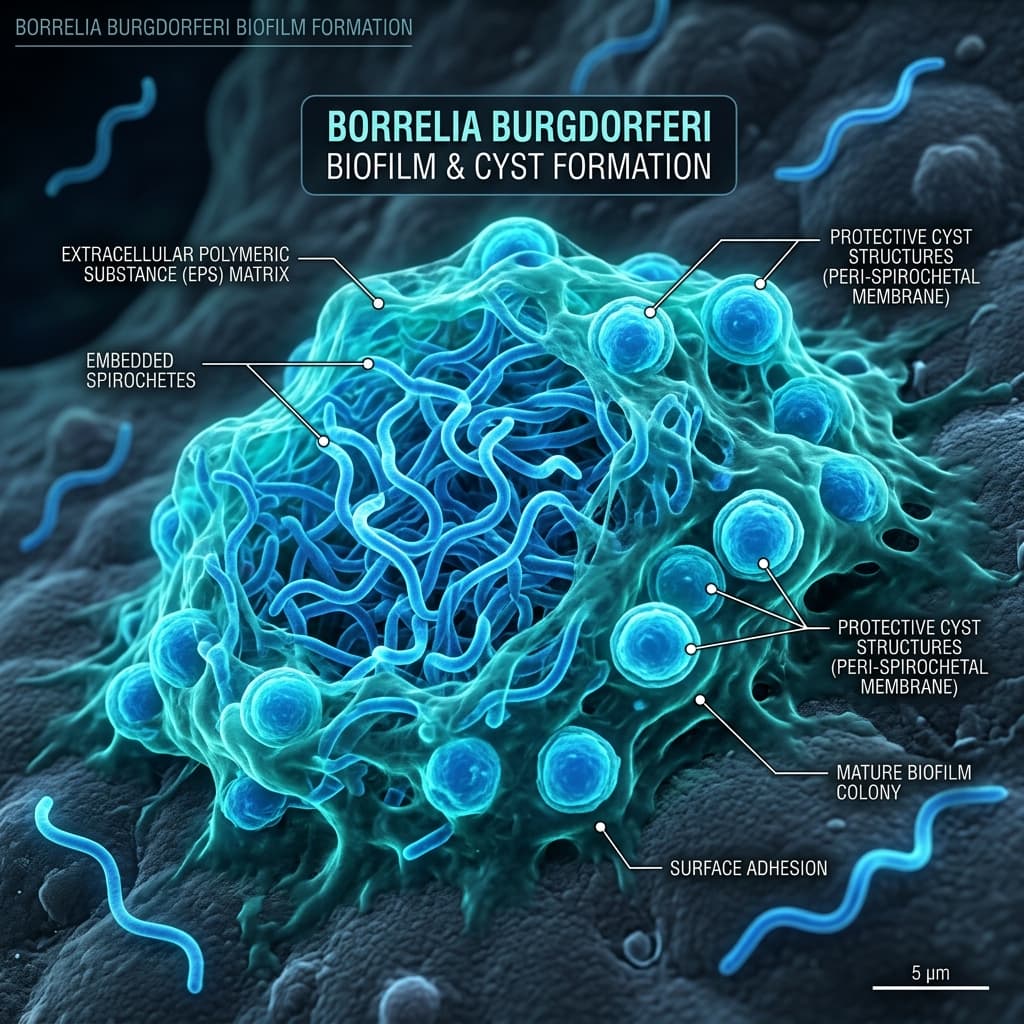
Un biofilm no es en absoluto una acumulación aleatoria de microbios. Es una "ciudad" altamente compleja y muy bien organizada de bacterias incrustadas profundamente en la matriz defensiva de mucosa viscosa o densa autogenerada llamada , con puentes de puro calcio, matriz de fibrina destructora e incrustaciones químicas de ADN bacteriano propio orgánico estructurado.
Las Borrelias están dotadas magistralmente a todos los niveles por la pura genética de supervivencia a incrustar el biofilm en cartílagos biológicos o el puramente neurológico tejido celular central. Escudadas y protegidas, logran comunicarse en equipo mediante un bioquímico y muy selectivo o poderoso y molecular medio ().
El Choque a Antibióticos
Antibióticos biológicamente de primera red o línea, tal como en esencia funciona la consabida o genérica doxiciclina o amoxicilina, resultan estructuralmente deficientes e incapaces de lograr mermar siquiera el revestimiento o polisacárido blindaje o la coraza. Dentro del santuario las Borrelias entran puramente fisiológicamente a detener o relentizar hasta en pausa un celular profundo coma puramente o metabólicamente vital evitando que el antibiótico biológicamente betalactámico, enfocado puramente al microorganismo en actividad de alta e hiper fragmentación celular o división y réplica puramente o divisionista o de ciclo celular rápido y continuo se fije o interactúe y ataque. Así el químico solo errará.
Las Tres Formas de Mutación (Persistentes)
Borrelia burgdorferi reina suprema en el mundo biológico mutando bajo gran nivel o por un puramente o extremo fuerte e intenso biológico ataque. La Borrelia se transformará orgánicamente bajo estrés térmico o puro puramente biológico inmunológico a lo agresivo puramente ante agresiones u a intensas dosis simples o agresivas genéricas r a tres distintas estructuras fisiológicas:
1. Forma de Espiroqueta Abierta
Esta morfología clásica en forma de sacacorchos se divide de forma extremadamente rápida. Nada activamente en el torrente sanguíneo en sus fases iniciales y responde muy bien a antibióticos de rutina (como la amoxicilina o doxiciclina genéricamente recetada). Es la forma responsable del Eritema Migrans (erupción en diana) y de la fiebre inicial.
2. Las Formas L (Sin Pared Celular)
La penicilina y la doxiciclina atacan las estructuras de la pared celular. La astuta táctica evasiva de las Borrelias consiste en desprenderse al instante de su propia pared física, lo que convierte a estos formidables antibióticos en armas completamente inútiles. Ocultas en su forma "L" desnuda, persisten indetectadas viviendo profundamente en el interior celular de nuestros macrófagos, burlando así el sistema inmunitario de todo tipo de alarmas.
3. Quistes Latentes o "Cuerpos Redondos"
El error más grave de la medicina moderna general: dosis bajas y cortas obligan trágicamente a millones de espiroquetas a enroscarse fuertemente y fusionarse defensivamente compactándose como densos, acorazados e impenetrables quistes esféricos. Hundidos en su denso biofilm protector, detienen su línea metabólica bajando vitalmente a un profundo coma letárgico protector. Como auténticas bombas de relojería biológicas en el tejido conectivo, esperarán latentes décadas su ocasión (si las defensas caen) para desenrollarse ávidamente desencadenando la consiguiente "recaída" agresiva.
Terapia Moderna Combinada (Biofilm-Hacking)
Asumida la cruda y pegajosa pared real de los films biológicos de naturaleza mucosa protectora así como la genial astucia defensiva y letárgica resistente de sus quistes encapsulados, se hace científicamente notorio lo ingenuamente arriesgado y tristemente fallido que resulta pautar solo y ciegamente "3 o 4 semanas seguidas en antibiótico estándar de tipo genérico" en modelo de cura monoterápico. Instituciones formidables como Johns Hopkins (Dr. Ying Zhang) o el afamado Dr. Richard Horowitz establecieron rigurosamente modelos biológicos por etapas muy divididos, pautándolos en denominados y eficaces "Protocolos Persister":
1. Destructores de Biofilm (Hierbas & Enzimas)
Antes de aplicar antibióticos fuertes, es imperativo disolver el escudo del biofilm. Enzimas proteolíticas específicas como la Lumbroquinasa, Nattokinasa o Serrapeptasa pueden destruir literalmente la densa barrera de fibrina bacteriana. Al mismo tiempo, los destructores vegetales de biofilms (como el ) deconstruyen vitales puentes de calcio de la matriz.
2. Enfoques de investigación experimental fuera de indicación (Dapsona, Disulfiram)
En el ámbito de la investigación clínica y preclínica, se estudian fármacos bajo prescripción como la dapsona (en combinaciones experimentales con rifampicina) o el disulfiram frente a formas persistentes. Nota médica relevante: Se trata de enfoques de investigación puramente experimentales y fuera de indicación (off-label) sin autorización reglamentaria para la borreliosis. Su empleo conlleva graves riesgos para la salud y efectos adversos severos (como neurotoxicidad y toxicidad hepática), requiriendo obligatoriamente supervisión médica especializada.
3. Régimen de Antibióticos Pulsados a Ciclo Controlado
Una presión antibiótica ininterrumpida puede favorecer que los quistes permanezcan en estado de inactividad metabólica. Los protocolos de administración intermitente con períodos de descanso buscan incidir sobre las bacterias cuando retornan a fases activas y más sensibles a los antimicrobianos.
Conclusión al Paciente
El Síndrome de Lyme Crónico no consiste en un desgaste de pura afección mental ni en cansancio puramente anímico. Constituye la evidencia clínica pura de extraordinarios mecanismos bioquímicos y adaptativos regidos por formidables mutaciones quísticas de supervivencia letárgica. Seguir ciegamente hoy un obsoleto tratamiento de 2 semanas de doxiciclina expone dolorosamente una falta extrema de cultura médica sobre la increíble astucia celular de las borrelias.
— Dr. Philippe Bottero, Especialista en Infectología y Medicina Tropical
Referencias científicas y estudios basados en evidencia
- [1]
Sapi, E., et al. (2012): Characterization of biofilm formation by Borrelia burgdorferi in vitro. PLoS One
- [2]
Horowitz, R. I., & Freeman, P. R. (2019): Efficacy of Double-Dose Dapsone Combination Therapy in the Treatment of Chronic Lyme Disease/PTIDS. Antibiotics
- [3]
Liegner, K. B. (2019): Disulfiram in the Treatment of Lyme Disease and Babesiosis. Antibiotics